
Author Interview with Jerrice J. Baptiste on Coral in the Diaspora
"I’ve been told by readers that the book makes them feel like a member on the island... There’s no greater compliment than that I could have received for Coral in the Diaspora."

We cannot believe it’s almost been two years since we published Coral in the Diaspora by Jerrice J. Baptiste. With only eleven copies left in stock, we wanted to re-visit this delightful prose chapbook on Haitian culture. In this interview, Abode Staff Reader, Teri Vela conducted an interview with Baptiste on her work, inspirations, and thoughts about her chapbook. Keep reading to learn more!
Book Description: Coral in The Diaspora by Jerrice J. Baptiste is a prose chapbook collection that captures the lives of the Haitian people as they embrace the goodness in their community. It celebrates the wisdom of the elders as leaders who are cherished for their commitment to help the island thrive. Each member of the island's community is welcomed and valued for their special gifts and the joy they each create by being unique souls. Coral in The Diaspora creates a visceral experience for its readers through its colorful imagery and beautiful language by giving voice to the island of Haiti.
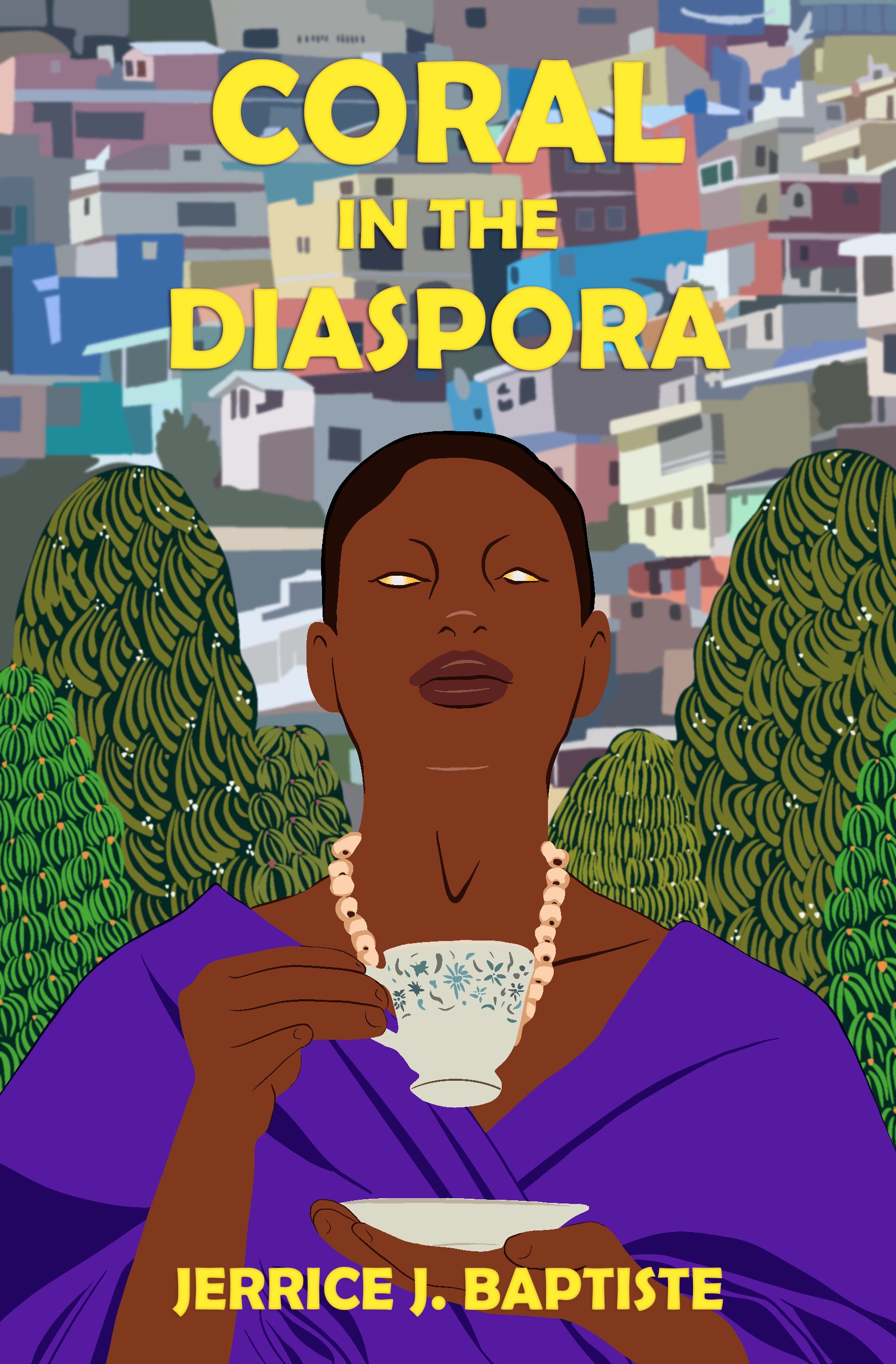
The book carries a variety of beautiful, individual fragments: red seeds of the pomegranate (“Pomegranates,” p.14), yellow corn (“Le Maïs,” p.18), blue or white headscarves (“The Sacred Wash,” p. 21), cacao (“Secret Ingredient,” p.19) pink rosary beads (“Alchemy,” p.29), and this is part of where I get a sense of the coral from the title Coral In The Diaspora. Can you speak to why the title names coral specifically? I don’t think the word appears elsewhere in the book.
The wonderful title of the book refers to the lifestyle, objects and concepts that are the backbone of Haitian culture, for example selling food, sharing food in community, prayer and caring for the land. Haitians from all over the world, at home in Haiti and in the diaspora are the backbone of Haiti and our belief systems are generated from the culture and from our celebrated traditions too. These beautiful things keep us connected to our native land no matter where we live.
Most pieces in the book also carry a chorus of relationality. Fathers, mothers, children, abound in this book. Even when no other person is in the scene, the great grandmother in “Eating Below Stars” has her favorite donkey Zig with her, and their interactions are as careful and tender as any other in this book (p.16). Can you tell us about your literary community, your literary ancestors, and who you were thinking about when writing this book?
When I was writing the book I was in awe of the stories that birthed through me. I realized that the ancestral ties were strong. I remembered the stories that I had heard about my own great-great-grandmother and they were simple, but powerful with meaning because they spoke loudly about how Haitians respected and revered the elders, and how the elders guided the community. I was also thinking strongly about my great-grandfather Laurore who was a cherished Baptist minister who left such a great impression on all of us in our lineage. He was a fascinating elder who kept his children and grandchildren connected by faith and he was an example of how to shine our light in the world.
Can you tell us about ritual and tradition in this book? In “How to Eat a Haitian Mango” (p.15) there is the “sacred moment” of biting a hole into a ripe mango to suck out the juice, and then there is also the grooming afterward, where Emile licks the mango off her fingers. To close the book, we get a vision of one sister braiding another sister’s hair into cornrows before birth (“Our Tradition,” p.33). Tell us how ritual & tradition function within the everyday happenings of this book.
Daily rituals and traditions make up the totality of Coral in the Diaspora. They show the tender and caring ways the characters help each other. And how each simple task such as washing clothes near the waterfall or biting the top part of the mango to enjoy its juice or braiding the hair of the pregnant woman before giving birth brings the reader into the experience. They are each valued from the early morning until the late evening, the characters are living their lives with consciousness no matter how small or how big. Each one plays an important role in keeping the rituals and traditions ongoing from generation to generation.
The book begins with a child born, and ends with an impending birth, while the rest of the book doesn’t have “epiphanies” so much as it carries the epiphanies of everyday life. Can you tell us about your sense of the mundane versus the extraordinary, and what relationship those concepts have, if any, in Coral in The Diaspora?
The magic that is created in Coral in the Diaspora begins with Great-grandmother welcoming a newborn at birth and the book closes with a character getting ready to give birth. I felt that the eldest woman being present at each birth on the island to be a unique experience and tradition, and the woman being cared for before and after birth to be significant as well. As much as there are some mundane daily activities taking place in the book they do become extraordinary moments because each person performs each task with such presence and joy. The mundane acts leave the reader with a heartfelt feeling as if the reader had participated as well. The book creates such wonderful sensory moments as one reads. I’ve been told by readers that reading the book makes them feel like they were a member on the island and I placed them directly into the scene. There’s no greater compliment than that I could have received for Coral in the Diaspora.
Can you tell us about home in this book? The word “diaspora” in the title suggests that the relationship between the speaker or writer and home is one of distance—one writing of home from a distance, from elsewhere. Tell us what writing about Haiti in this book does for your own understanding of home.
When I left Haiti my native home and immigrated to the USA, I felt that I took that a piece of my country with me in my heart. No matter where I lived, my experiences make me feel like Haiti will always be my home and I carry that love within me. Yes, I’m a member in the diaspora and all I have are my memories of my homeland and they sustain me and keep me connected to the land of my birth. I think this book makes me feel even closer to Haiti even more so than before. I just want to share those memories with everyone through my writing.
About the Author
Jerrice J Baptiste is a visual artist, poet, author of nine books. Coral in The Diaspora is published by Abode Press. She’s been nominated three times for a Pushcart Prize and as Best of The Net. Her poetry has been published in Artemis Journal, The Write Launch, The Banyan Review, The Yale Review, and others. Her watercolor drawings are published in MER, Spirit Fire Review, and others. Jerrice has presented her poetry and art work at The Omega Institute in Rhinebeck, NY. She’s been featured twice as solo artist in 2025 & 2026 at The Mountaintop Library in Tannersville, NY.
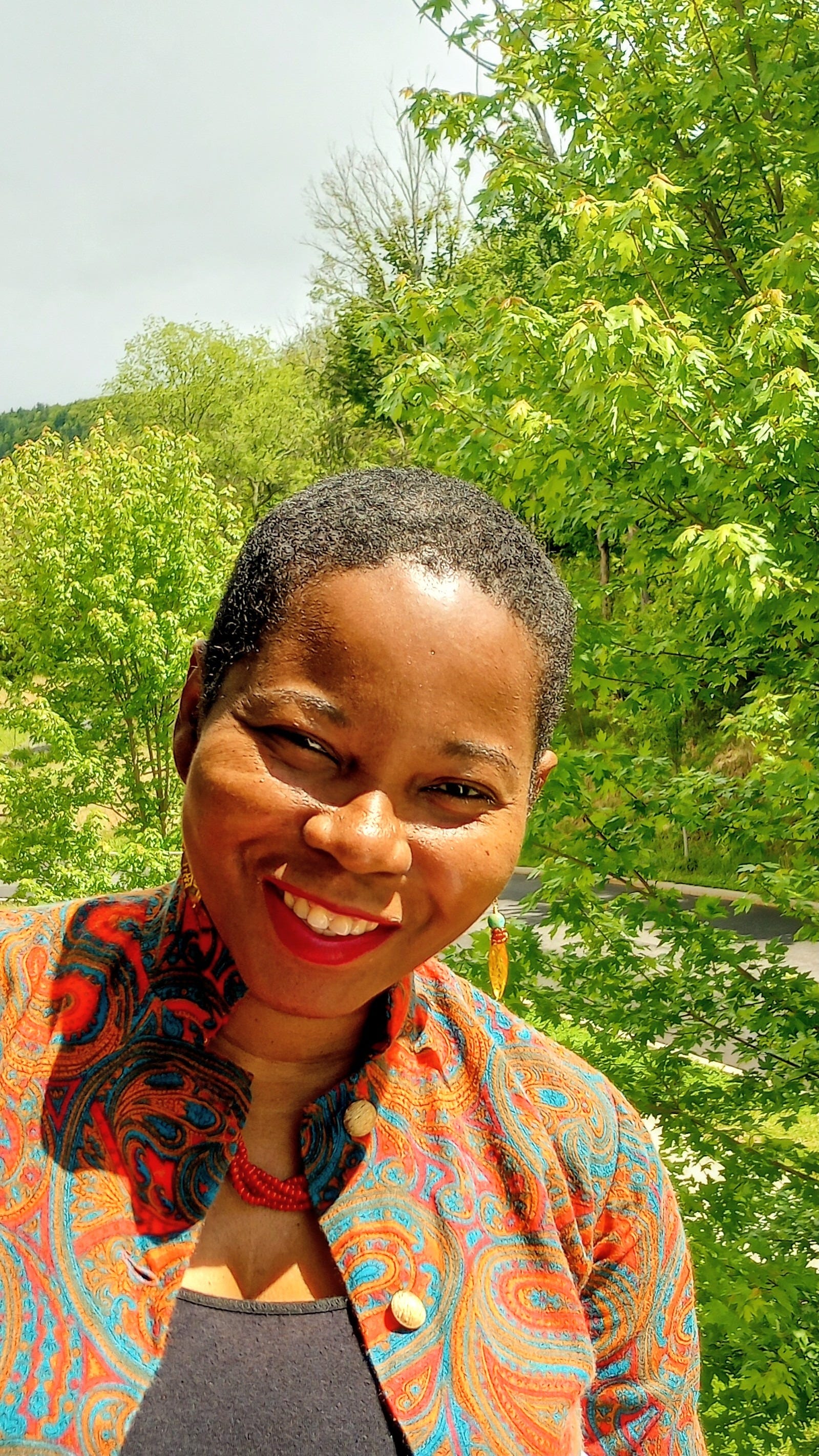
About the Interviewer
Teri Vela (she/her) is a queer Latina poet, mother, and former public interest attorney. She is an assistant poetry editor with Split Lip Magazine, a reader with Abode Press, and a graduate of the MFA Program for Writers at Warren Wilson College. Her poems can be found in Puerto Del Sol, Shenandoah Literary Magazine, Villain Era and more. Teri stands in solidarity with the liberation of Palestine and of all oppressed peoples.

There are only eleven copies left of Coral in the Diaspora. Grab your copy here!